
Introduction to financial markets: How to start trading online
Read our beginners’ guide to financial markets and online trading and learn new ways to capture opportunities on global markets.
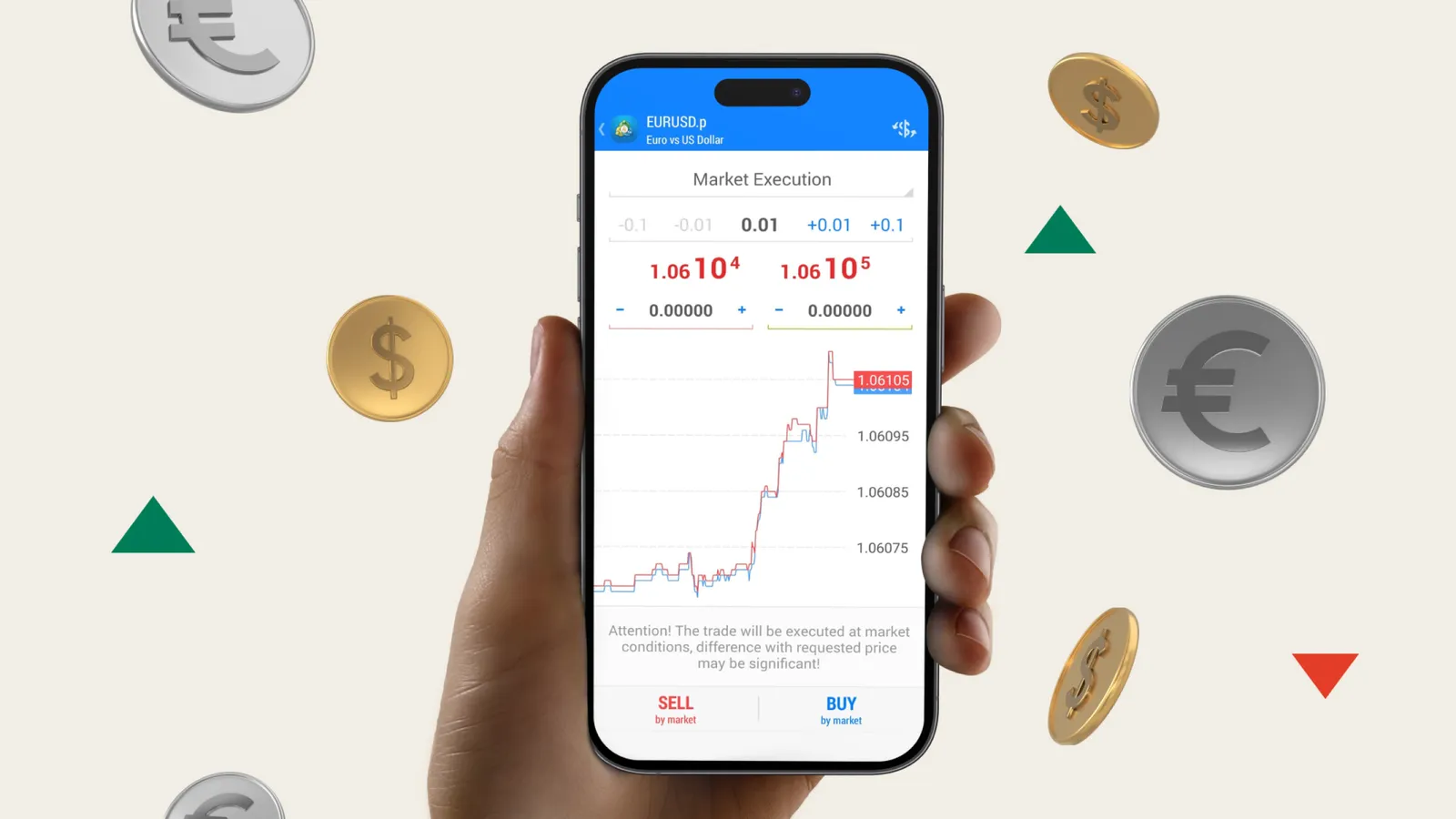
Playing a major role in the economy, financial markets are where the assets are traded between a buyer and a seller
Online trading is a way to generate wealth by buying and selling assets on financial markets
A variety of financial products including company shares, ETFs and commodities like oil can be traded in global markets
Trading involves a lot of unique terminology and financial slang that might seem strange at first, but it’s important for beginners to understand the right terms to be able to read markets faster
Anyone can start trading online by creating an account with a broker and practicing with a demo account
Introduction to financial markets
The term ‘financial market’ is used to describe a typically digital marketplace for exchanging or trading financial assets as it brings buyers and sellers together. Financial markets differ, for example, by size, structure, regulations, instruments, and activity. Essentially, they are a marketplace for money as they enable those who need more money to meet with those who have surplus funds. Money (or capital) changes owner in the form of a financial instrument or product. These products include stocks and bonds, commodities, and currency pairs.
Financial markets enable important economic activities that are crucial to keeping capital economies running smoothly, as investors who have extra capital can meet with those who need it.
Companies can find funding for their business to facilitate growth. Growing businesses benefit the economy by providing jobs for more people and generating more tax income for governments. Companies are able to gather funding from investors by selling shares or buying loans.
Investors can be individuals who want to invest their extra capital to build wealth, or organisations looking for to create investment opportunities or return on their investments.
There are also other participants in the financial markets. Banks and brokers act as mediators that help to connect buyers and sellers on financial markets and facilitate the trading of financial products, whereas governments can also be active on financial markets by borrowing and lending money. Regulators play a crucial role, as all markets need rules and regulations to protect and sustain a healthy environment for growth.
What is online trading?
Online trading refers to buying and selling products on digital financial marketplaces with the aim of capturing profits. Financial markets offer a variety of products to invest in and trade. These assets include shares, commodities, indices, and ETFs.
Unlike investors, traders can capture profits by speculating on the movements of prices rather than buying and owning the underlying asset. For example, if you invest in gold directly, you’ll physically own gold and have it stored; but if you trade on gold against the USD (XAU/USD), you’ll be speculating on whether its price will become stronger or weaker than the US dollar.
This is typically referred to as trading on a secondary market, where investors can resell products to other investors if they think they can take advantage of unexpected changes in price.
Market prices are influenced by supply and demand that can be impacted due to several factors. If supply increases prices can drop, and if demand increases prices will rise. These changes in asset value are called ‘volatility’ and is what allows traders to capture profits.
Trades are made through a brokerage's internet-based trading platform which means anyone can have access to global markets. Traders can use their computer, tablet, or smartphone to place orders and manage their portfolios from anywhere in the world.
Common trading terms
If you're new to trading, you’ll see and hear words that may sound unfamiliar. Trading has its own unique vocabulary, and knowing what some of these words mean will help you navigate the markets and better avoid uncertainty.
Let’s look at some words that online traders use on daily basis:
Long: In trading, to “go long” means you are buying an asset that you think will increase in price, with the intent that you will sell it later for profit. This is also described as “going long” or “taking a long position”, but it does not mean you need to keep the asset in your portfolio for a long time.
Short: “Going short” means entering a “sell” position for an asset you don’t directly own, with the intention that it can be bought back at a lower price in the future. You may also see this strategy described as “short selling”. If you go short, your profit or loss will be calculated as the difference between the price in which the asset was sold and the price at which it was bought back, minus any borrowing fees or interest paid.
Leverage: Leverage describes using borrowed funds to increase the size of your position, which magnifies its potential for gains and losses. This means you can deposit a fraction of the trade size you would like to control by using funds provided by a third-party, such as your broker or liquidity provider. For example, if the leverage is 1:20 investing $100 dollars allows you to place a trade worth of $2,000.
Lots: In currency trading, a currency pair is traded in lots. A lot is 100,000 units of the base currency in a currency pair. The base currency is the first currency shown in a currency pair quotation. Lots are important because they determine the size of a trade and the amount of profit or loss a trader can make.
Pips: Pips are the smallest price changes in the currency market, used to measure changes in currency pairs. For example, if the EUR/USD currency pair moves from 1.1000 to 1.1050, it has moved 50 pips.
Spread: Usually, the spread is the price difference between the bid price (the amount traders are willing to buy it for) and the ask price (the amount traders are willing to sell it for) of a product, like a currency pair or share. This is called the bid-ask spread. It represents the cost of trading and can vary depending on market conditions and liquidity. Highly liquid markets tend to have a tighter spread.
Stop loss and take profit orders: Stop loss and take profit orders are popular risk management tools which allow traders to place a trade that will automatically close out when it reaches a certain price point. These are used to improve chances of reduced loss and to lock-in potential profits. A stop loss order works by automatically selling your chosen asset if it reaches a certain price level to limit losses, while a take profit order is placed to automatically sell if it reaches a certain price level to secure profits.
How to start online trading
To start capturing profits on financial markets, first you'll need to open an account with an online broker to get access to trading products and platform. The best trading platforms offer a large variety of market sectors and include advanced analytical tools to help you identify market trends easier.
Follow these steps to get started:
Do research
Always conduct research about the markets and the instruments you are interested in trading before you make a new trade. This includes understanding the risks involved, as well as learning about trading strategies and techniques.
Develop a trading plan
Create a detailed trading plan that outlines your goals, risk management and entry/exit strategies. Finding the right trading strategy usually requires testing and tweaking, and traders must constantly evolve their strategies.
Choose a broker
A broker acts as an intermediary between you and the financial market. Choose a broker that is regulated and offers a trading platform that suits your needs. You also want to consider their product offering, pricing and customer service when before making any decisions.
Open a trading account
You cannot place trades on global markets without opening a trading account with an online broker. Regulated brokers will require verified personal and financial information to protect their client portfolios and ensure a fair and secure trading environment for all.
